
It’s interesting how a simple pipe leak can turn into a major water damage crisis at home. When facing such emergencies, knowing the right techniques to tackle the situation is essential. You need to assess the damage first and then prioritize safety before you begin. From pumps to vacuums, each method plays an important role in the water removal process. Let’s explore the key steps that can help restore your home and prevent further issues.
Key Takeaways
- Conduct an initial hazard assessment and wear appropriate safety gear before starting any water removal process.
- Utilize submersible or trash pumps for efficient extraction of large volumes of water.
- Employ wet/dry vacuums for smaller areas, ensuring proper sealing and frequent tank emptying.
- Position dehumidifiers strategically in affected areas to maintain optimal humidity levels for drying.
- Use high-quality absorbent towels and sponges for thorough cleanup, focusing on corners and hidden spaces.
Assessing the Situation and Safety Precautions
Before you begin any water removal efforts, it’s essential to assess the situation thoroughly to ensure your safety and that of your property.
Start with an initial inspection of the affected area. Look for visible hazards like downed electrical wires or unstable structures.
Put on appropriate safety gear, including gloves, boots, and a mask, to protect yourself from contaminants.
Check for signs of mold or structural damage, which can pose additional risks. Document the extent of the water intrusion for future reference.
If the water source is from a burst pipe or flooding, determine if it’s safe to shut off the electricity.
Prioritize your safety; it’s vital before you proceed with any water removal action.
Utilizing Pumps for Efficient Water Extraction
Pumps are vital tools for efficiently extracting water from your home after a flood or leak.
Submersible pumps are particularly effective for deep water removal, as they can be placed directly in the water, drawing it out through a hose. These pumps are designed to handle significant volumes and can quickly restore your space.
For larger debris-filled areas, trash pumps are ideal, as they can handle solids up to a certain size without clogging.
When selecting a pump, verify it meets your specific needs, considering factors like depth and water clarity.
Using the right pump speeds up the extraction process while minimizing potential damage to your home, making it a vital step in recovery.
Employing Wet/Dry Vacuums for Smaller Areas
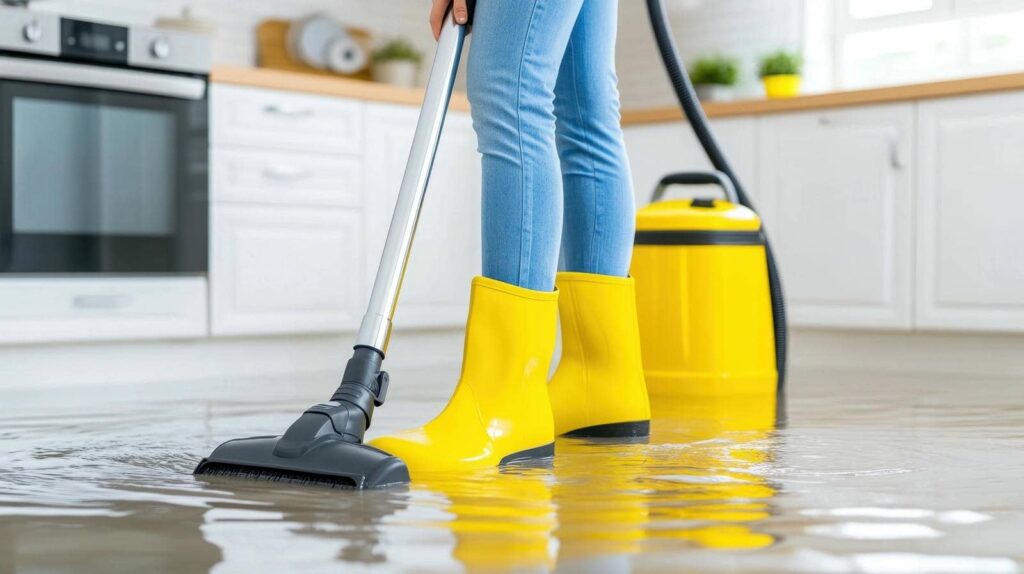
For smaller areas affected by water damage, employing wet/dry vacuums can be an effective solution.
Start by verifying the vacuum is suitable for both wet and dry applications. When you begin wet/dry vacuum usage, make sure to select the right nozzle for efficient suction techniques. This helps maximize water removal from carpets, baseboards, and corners.
Move the vacuum slowly over the affected area, allowing it to fully absorb the moisture. After the initial pass, empty the tank to avoid overfilling and reduce suction efficiency.
It’s essential to confirm proper sealing of the vacuum to prevent leaks. Following these steps will help you effectively manage water damage, fostering a sense of belonging in a community that values home care.
Implementing Dehumidifiers to Remove Moisture
A dehumidifier can be a game-changer when it comes to removing excess moisture from your home after water damage. To ensure effective moisture control, consider the ideal dehumidifier placement.
Position it in the most affected areas, ideally at a height where airflow is unobstructed. Close windows and doors to maximize efficiency and prevent outside humidity from seeping in.
Monitor the humidity levels using a hygrometer; aim for around 30-60% relative humidity for ideal comfort and safety. Regularly empty the water reservoir or, if possible, connect a drainage hose for continuous operation.
After a few days, reassess the moisture levels and adjust the dehumidifier settings as needed to maintain a dry environment in your home.
Using Absorbent Materials and Towels for Final Cleanup
Effective cleanup after water damage hinges on using absorbent materials and towels to soak up residual moisture.
Start by selecting high-quality towels designed for water absorption; microfiber or cotton are ideal. When employing towel techniques, gently press down on wet areas, allowing the fabric to draw moisture without rubbing, which could damage surfaces.
Rotate and wring out towels frequently to maximize absorption. You can also use absorbent materials like sponges or specialized water-absorbing pads in larger areas.
Focus on corners and edges where water tends to accumulate. Always remember to check hidden spaces, such as under furniture.
This methodical approach ensures thorough drying, reducing the risk of mold and structural damage, and helps your home feel safe and welcoming again.
Frequently Asked Questions
How Can I Prevent Future Water Damage in My Home?
To prevent future water damage, explore waterproofing options like sealants and membranes. Implement effective drainage solutions, ensuring gutters and downspouts direct water away from your foundation. Regular maintenance will help safeguard your home from moisture issues.
When Should I Call a Professional Water Removal Service?
You should call a professional water removal service immediately when you notice significant water damage or flooding. Their expertise ensures thorough extraction, minimizing long-term issues and restoring your home’s safety and comfort efficiently.
What Are the Health Risks Associated With Standing Water?
Standing water poses serious health risks, like mold growth and bacteria proliferation, while also lulling you into a false sense of safety. You need to act quickly to protect yourself and your loved ones.
How Can I Tell if My Home Has Hidden Water Damage?
You can tell if your home has hidden water damage by checking for water damage signs like discoloration, mold growth, or a musty smell. Also, inspect walls and ceilings for hidden leaks that might cause further issues.
Is Homeowners Insurance Likely to Cover Water Damage Removal Costs?
While many insurance policies cover water damage, check your coverage limits carefully, as some exclude specific scenarios. Understanding these details ensures you’re prepared when emergencies arise.
Review
In the face of water damage, acting swiftly and methodically is essential, just like a firefighter tackling a blaze. By evaluating the situation, using pumps and vacuums, and implementing dehumidifiers, you can efficiently mitigate damage. Don’t forget the final touch with absorbent materials to ensure thorough cleanup. With these emergency water removal techniques, you’ll restore your home’s safety and comfort, reducing the risk of long-term issues. Stay proactive and prepared for any water-related emergencies!