
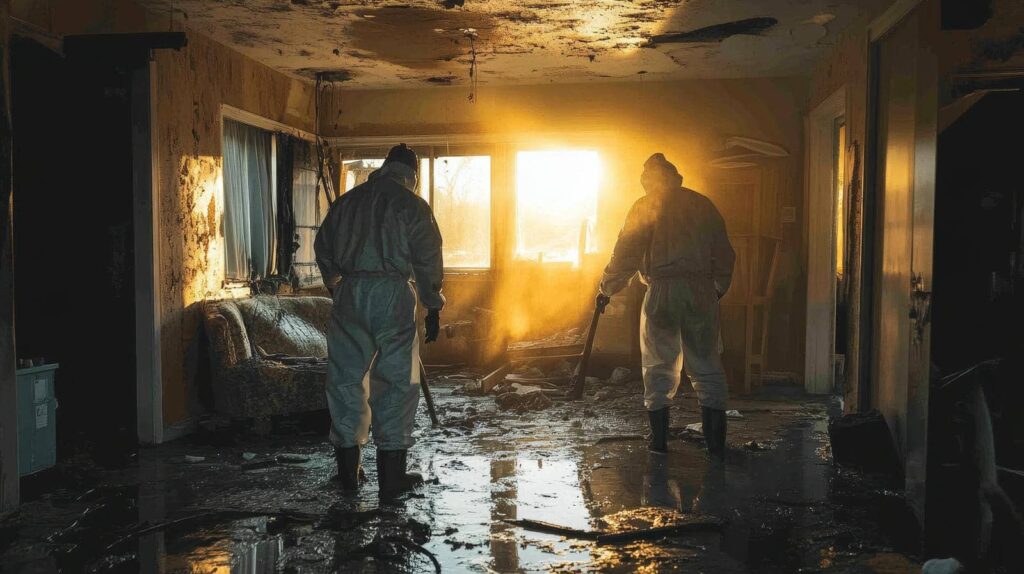
When a flood hits, quick action is essential to minimize damage and guarantee safety. You’ll need to assess the flood water situation carefully, starting with your immediate environment. Is it safe to proceed? Once you’ve secured your safety, you’ll want to focus on effective water removal strategies. Let’s explore the critical steps you should take to protect your property and belongings during such an emergency.
Key Takeaways
- Assess the situation for safety hazards like rising water and structural damage before starting any removal efforts.
- Shut off electricity and gas supplies to avoid accidents during the flood water removal process.
- Use sump pumps or wet/dry vacuums to efficiently remove standing water from affected areas.
- Remove furniture and personal belongings, prioritizing items based on value and vulnerability to water damage.
- Dry out the area with fans and dehumidifiers to prevent mold growth and further damage.
Assess the Situation and Ensure Safety
Before you start any flood water removal, it’s essential to assess the situation and confirm your safety.
Begin by identifying flood risks in your area, such as rising water levels or structural damage. Wear appropriate safety gear, including gloves, boots, and masks, to protect yourself from contaminants.
Check for hazards like downed power lines or unstable surfaces before proceeding. Ascertain you have a plan for evacuation if conditions worsen.
Monitor local weather updates and follow emergency protocols. By taking these precautions, you not only safeguard yourself but also create a sense of community as you prepare to help others.
Shut Off Electricity and Gas Supplies
As floodwaters rise, it’s crucial to shut off electricity and gas supplies to prevent hazards like electrocution or gas leaks.
Begin by locating your main circuit breaker and turning it off. If you’re unsure, don’t hesitate to call a professional for assistance.
Next, locate your gas meter and turn off the gas valve, usually found near the meter.
Remember, utility safety is paramount during emergencies. Always prioritize your safety and that of your loved ones.
Be prepared: having a plan in place beforehand can make a significant difference. Familiarize yourself with the steps to take before a flood occurs, ensuring you can act quickly and confidently when needed.
Your proactive actions in emergency preparedness can help safeguard your home and family.
Use Sump Pumps and Wet/Dry Vacuums
When floodwaters invade your space, using sump pumps and wet/dry vacuums becomes essential for effective water removal.
Sump pumps come in various types, including submersible and pedestal, allowing you to choose one that fits your needs. Submersible pumps work well in flood conditions, while pedestal pumps are better for smaller amounts of water.
For quick cleanup, wet/dry vacuums are invaluable. Look for vacuum features such as a high capacity tank and powerful suction to tackle the job efficiently.
Make certain you select the right tools for the volume of water you’re dealing with. Together, these devices help you reclaim your space swiftly, making the recovery process smoother and more manageable.
Don’t underestimate their importance in your emergency response.
Remove Furniture and Personal Belongings
To effectively mitigate damage during a flood, it’s vital to remove furniture and personal belongings from the affected area as quickly as possible.
Start by prioritizing items based on their value and vulnerability. For furniture protection, lift items off the floor and place them on blocks or a sturdy surface to prevent water damage. If possible, move larger pieces outdoors or to a higher level.
For personal item storage, use waterproof containers to safeguard smaller belongings, like documents and electronics. Document each item’s condition before moving it, as this will assist with insurance claims later.
Dry Out the Area and Prevent Mold Growth
After removing furniture and belongings, your next priority should be drying out the area to prevent mold growth.
Start by using fans and dehumidifiers to enhance moisture control; this will speed up the drying process. Open windows and doors to promote airflow, but be cautious of outside humidity levels.
Check for hidden moisture in walls and floors, as lingering dampness can lead to mold despite visible dryness. Don’t forget to address any carpets or rugs, as they can trap moisture.
Implementing mold prevention strategies, such as treating surfaces with antifungal solutions, can further safeguard your space.
Regularly monitor humidity levels to guarantee your area remains dry and mold-free, thereby protecting your belongings and health.
Frequently Asked Questions
How Can I Tell if My Insurance Covers Flood Damage?
To determine if your insurance covers flood damage, review your flood policy and check for specific coverage details. Contact your insurer to clarify any uncertainties regarding insurance claims related to flood damage for accurate understanding.
What Should I Do if I Encounter Hazardous Materials in Floodwater?
If you spot hazardous waste in floodwater, don’t wade in thinking it’s just a bit of trash. Prioritize flood safety: evacuate, alert authorities, and keep others away. Your health’s worth more than a curiosity.
Can I Use Regular Household Vacuums for Water Removal?
No, you shouldn’t use regular household vacuums for water removal. Instead, opt for wet/dry vacuums, designed specifically for such tasks. They’re essential for effective water removal techniques and guarantee safety during cleanup.
How Long Does It Typically Take for a Home to Dry Completely?
Typically, a home’s drying timeline varies, but complete moisture removal can take several days to weeks. Factors like humidity, ventilation, and temperature greatly influence the duration, so be patient during the process for best results.
What Are the Signs of Mold Growth After Flooding?
You’ll notice signs of mold growth like musty odors, discoloration on surfaces, and peeling paint. Use mold identification techniques, such as visual inspections, and implement prevention methods like proper ventilation to keep your space safe.
Recap
In the aftermath of a flood, you’re the captain of your ship, steering through the chaos. By following these steps assessing the situation, ensuring safety, using pumps and vacuums, removing belongings, and drying out the area you can guide your home toward recovery. Remember, the quicker you act, the better your chances of minimizing damage and preventing mold growth. Stay vigilant and proactive, and you’ll restore your space to its former state.